Chair of Heimkino
Chair of Heimkino
archive
*
archive *
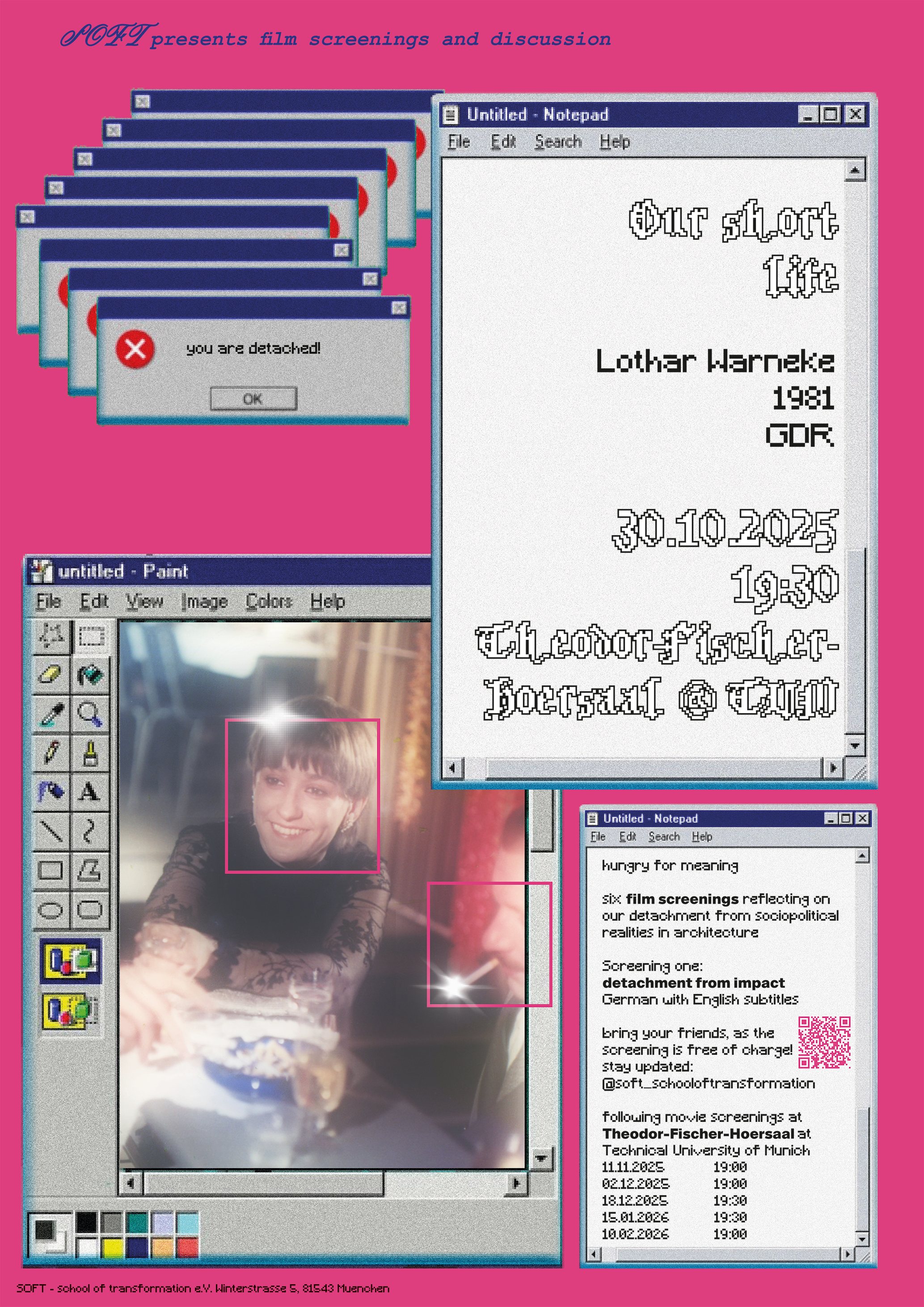
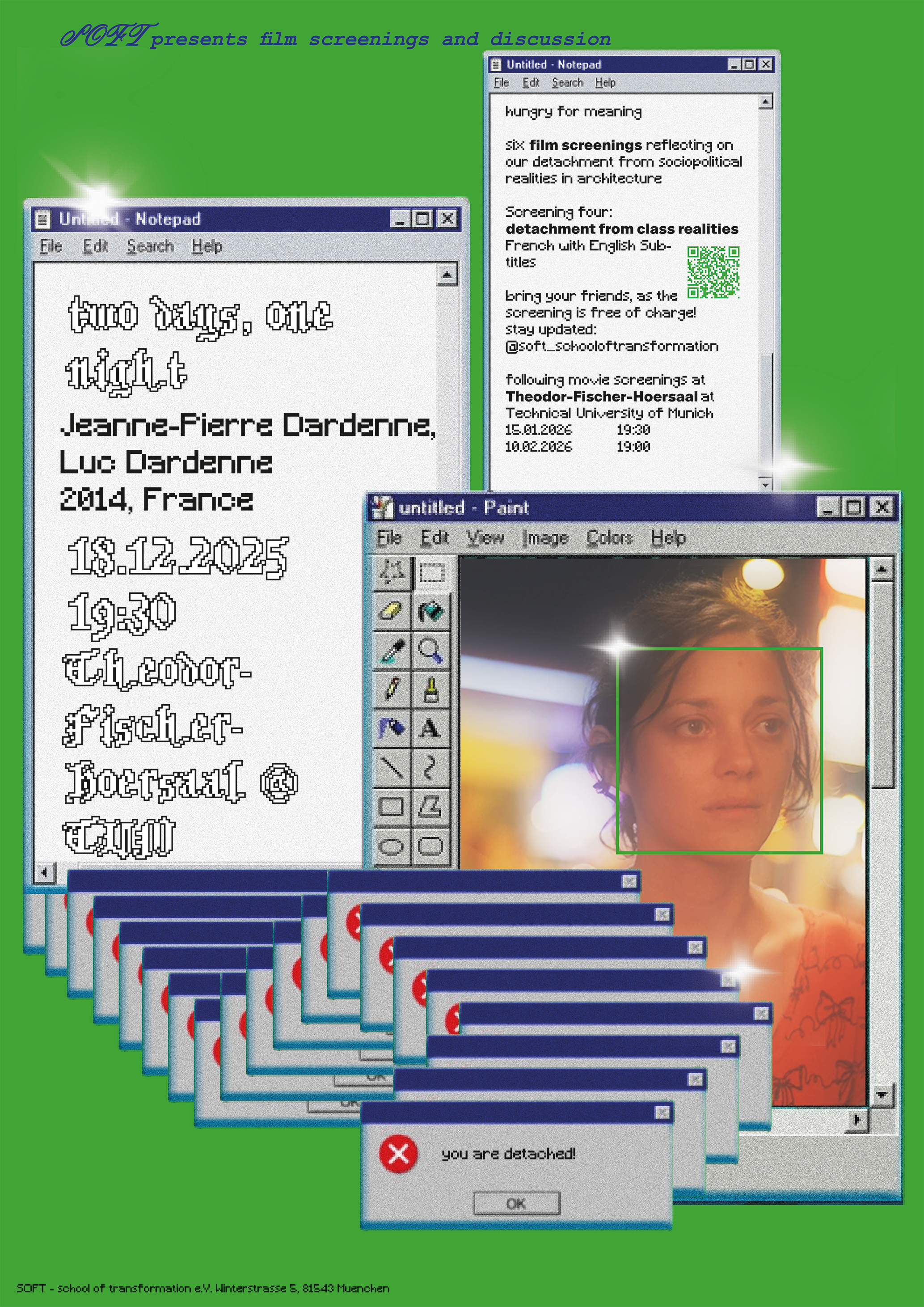
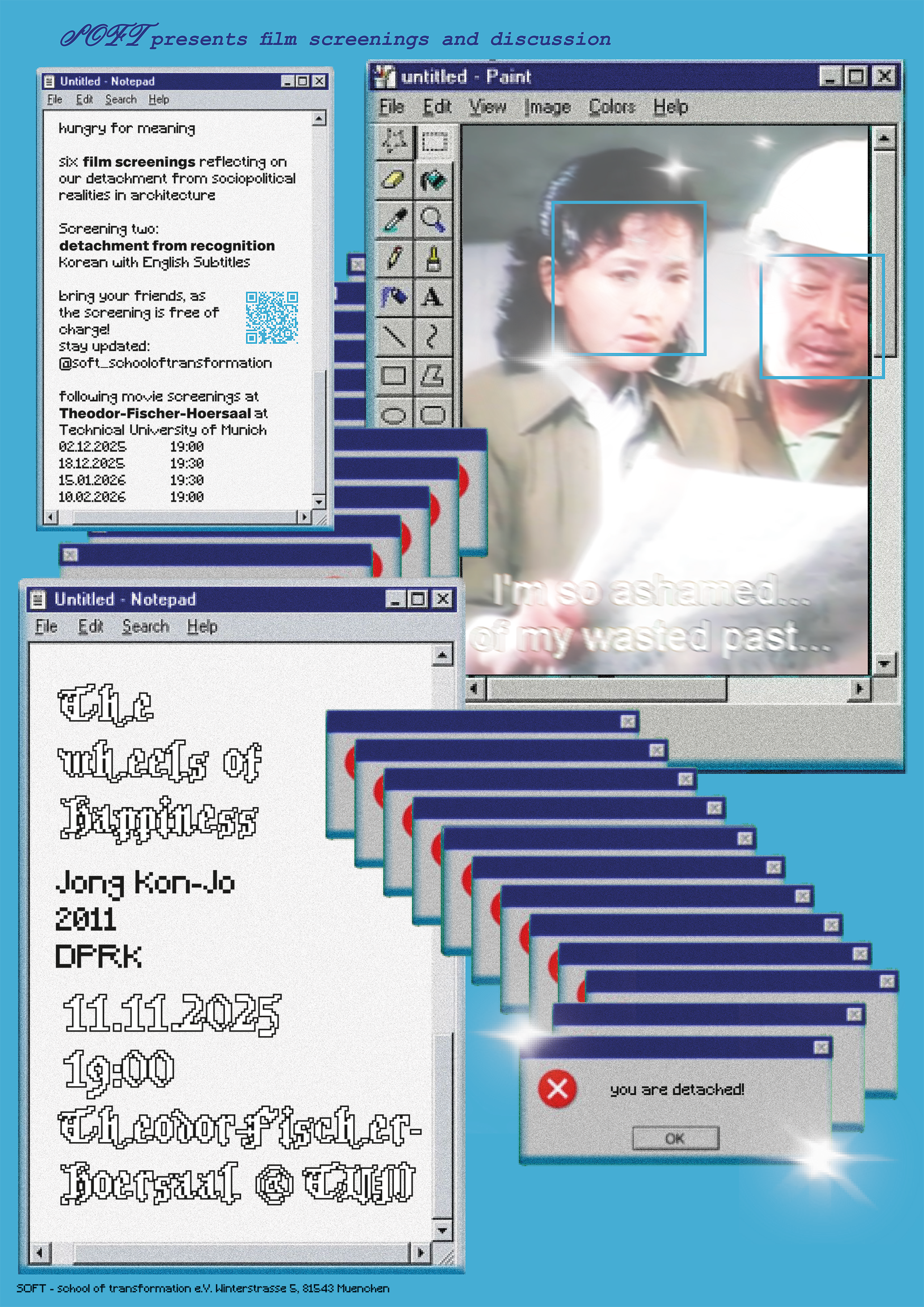
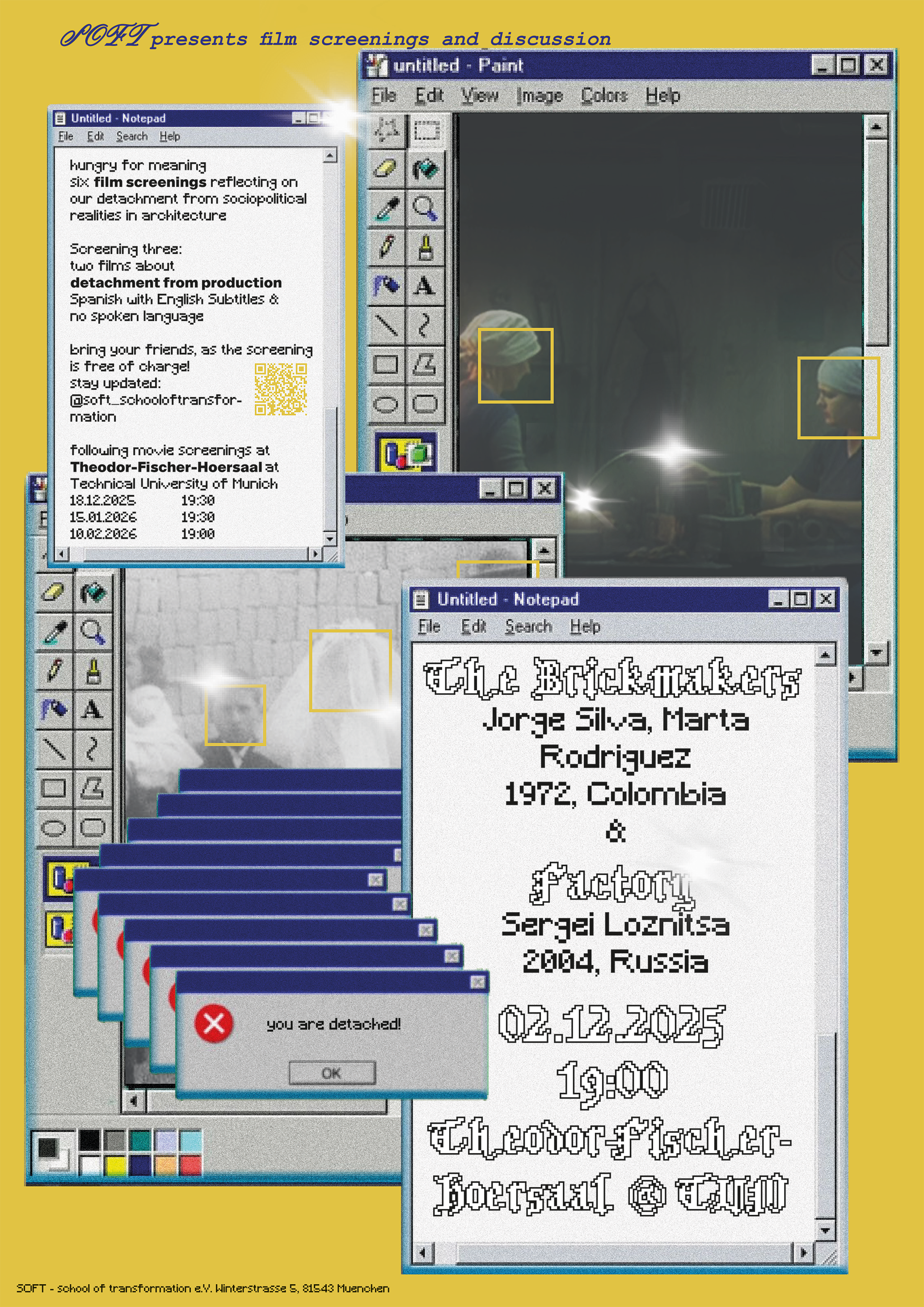
Detachment Series WISE 2025/26
In a world and institution which frames us architects as neutral observers and executors of design, aesthetic and structure, we claim back the idea of content, of politicised architecture.
DETACHEMENT of meaning
We want to understand how we are disconnected from the reality of things. We construct and plan in a world, where the sole meaning of our work is determined by the person who gives us the funds for this or that. We are detached from all other issues. While spaces open up in which we can show and plan for care and solidarity. These opportunities stay as extraordinary opportunities, given as such, for which we ought to be thankful. Our main concern stays the objective of the client, whose interest stays cloudy.
We are working for somebody under their conditions, we are deprived from recognition and identification, our dependents are to betray our values and morality. We can’t work for our needs, of affordable cities, livable environments, spaces of social wellbeing and community. Instead we reproduce gentrification, climate crisis and isolation, hostility. Because we must, we must earn and money comes through those who can afford it; the powerful, the investor, the benefactor. In this world our values are set by investment and we are meant to follow. Therefore we want to go through different realms of those detachments, to understand our complicity, the grief we feel, the moral impact we have and discuss what world and what organization, which measures and alliances we need as architects and planners, to get attached again.
Facing depression, finding meaning!
* Heimkino - detachment series
* Heimkino - detachment series

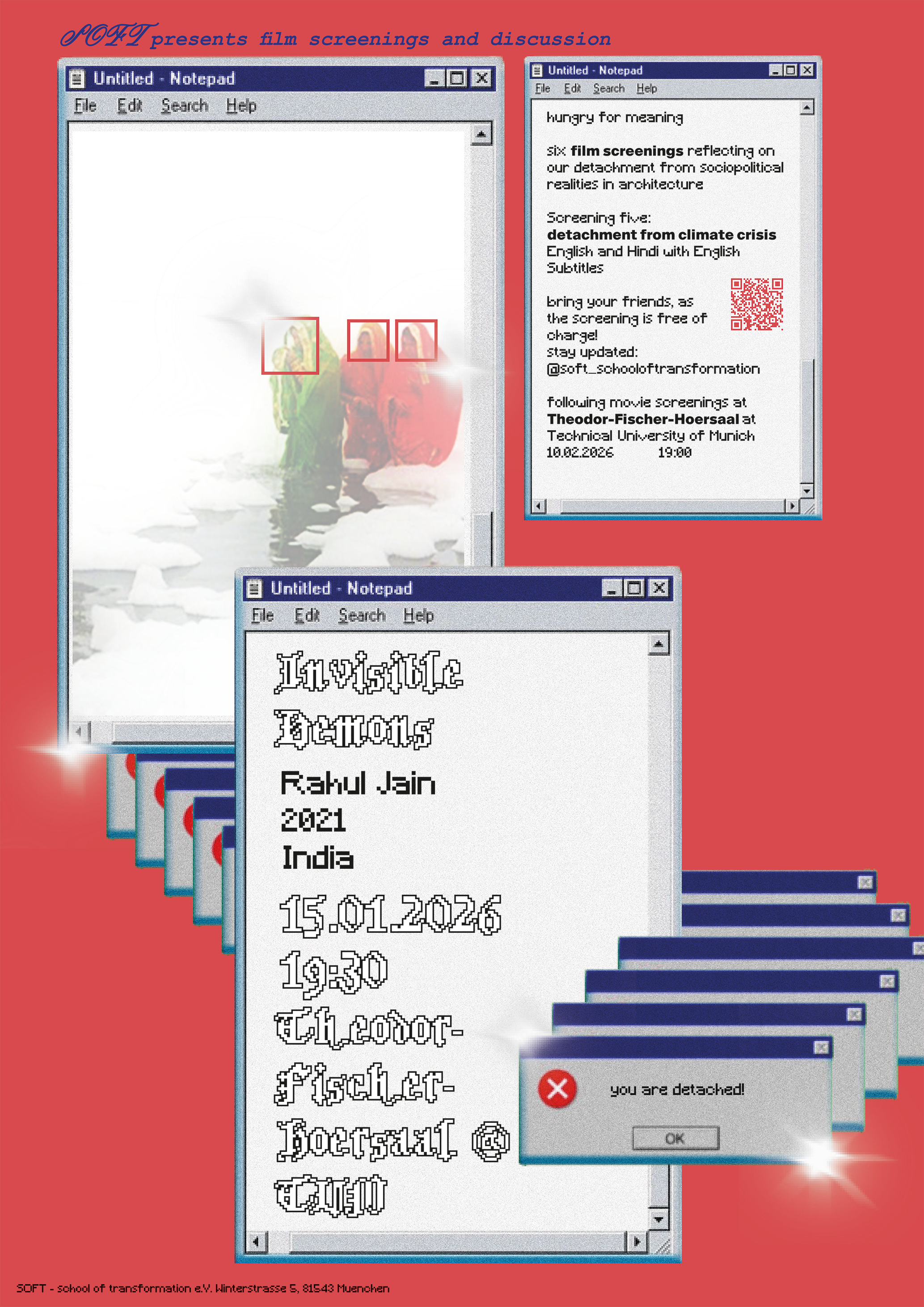

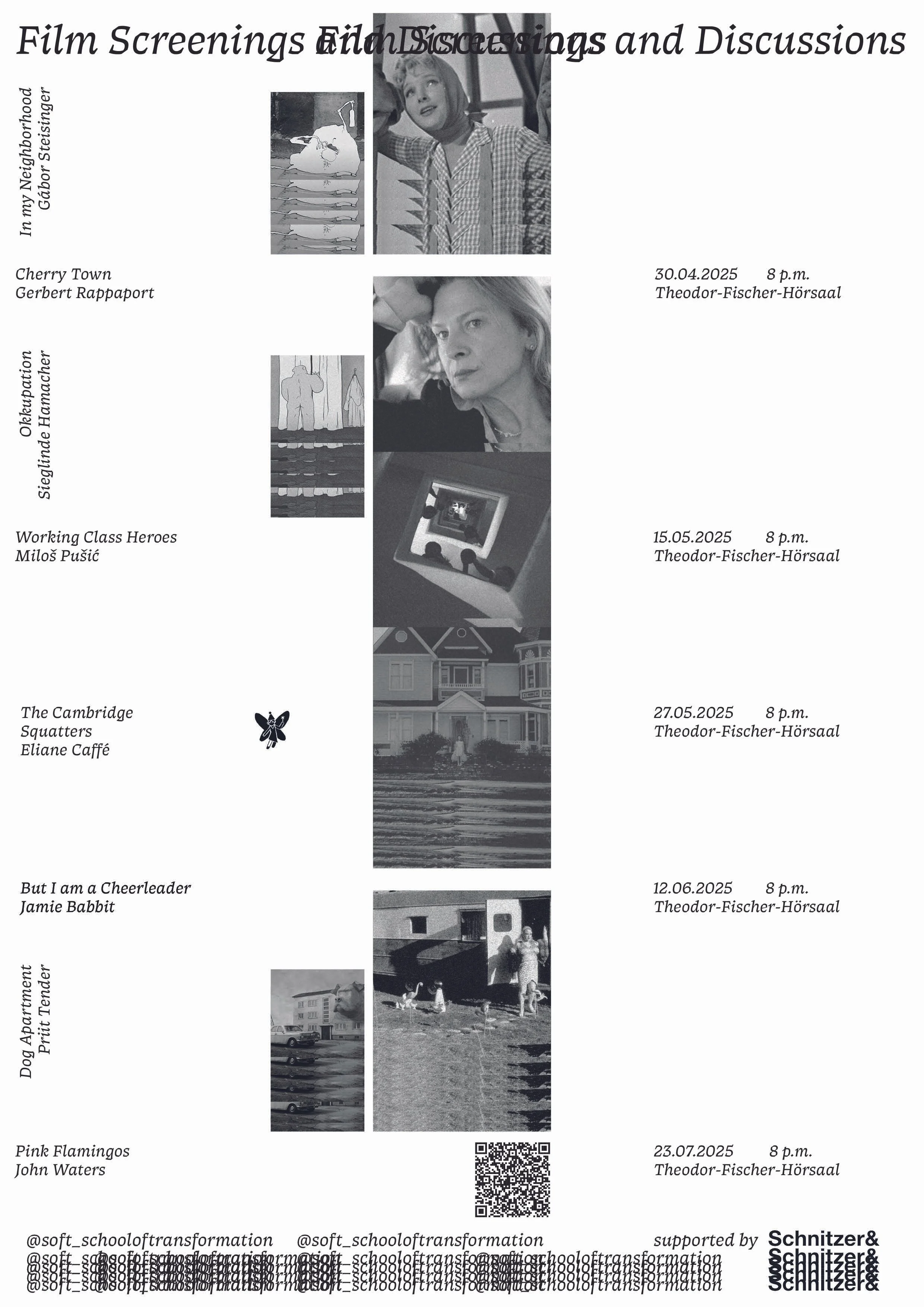


After exploring the performance of architects in our previous semester’s film series, we now turn inward: toward the house we live in—a house where we dominate, love, fight, share, and survive. This semester, we dive into the everyday and exceptional narratives written into our spaces. Through five screenings, we ask: What does the house—or the absence of one—mean to us? Does it have a soul? Do we, as users or planners, give it one—or does it escape us and begin to act on its own?
Our curated films approach housing from multiple angles: from socialist utopias and queer suburban resistance, to collective self-organization and class-based despair. In a world shaped by disintegrating social fabrics and extractive urban policies, this series is both a reflection and a revolt.
HAUS HAUS 2.0
The House and it’s political dimensions
SOSE 2025


Our first film series Architectural Ego explored the intersections of professional obsession, distorted senses of reality, and the emotional lives of architects and planners. Through five selected films, we examined the cultures of work within stylized creative professions, the psychological states of their protagonists, and what we might learn from them—especially when it comes to designing for people and an increasingly fragile environment often absent from their visions.
Each film shed light on the tensions between visionary ideals and social or ecological realities.
In our post-screening discussions, we reflected on where emotional wellbeing, social responsibility, and ecological urgency fit into architectural narratives—and where they fall through the cracks. The series aimed to offer a critical lens on professional identity in architecture and to imagine alternative, care-driven forms of practice.
Architectual Ego WS 24/25
Koolhaas Houselife SS24

Our second film screening focused on the theme of caretaking. We watched Koolhaas Houselife by Ila Bêka and Louise Lemoine, a film that offers a surprising perspective on a celebrated architectural work by following the daily routines of the housekeeper who maintains it. Together, we explored the intersection of star architecture and care work, and discussed how the everyday use and upkeep of a space can challenge and reshape architectural narratives. We were excited to host this screening in collaboration with Café Nachhoelzer.

Tangerine L.A. WS 23/24
For our very first film screening, we watched Tangerine L.A. by Sean Baker. The film opened up a lively conversation on friendship and solidarity, especially among those navigating life on the margins. In the discussion that followed, we reflected on the harsh realities faced by outcasts in urban environments shaped by neoliberal capitalism — and how moments of care and resistance can emerge in unexpected places.